Stories
América Latina y el Caribe
17-07-2023
In the global fight for resources, is the EU willing to take Latin America and the Caribbean seriously?
By: Maria Nyman, General Secretary of Cáritas Europe and Nicolas Meyer, Regional Coordinator of the Cáritas Latin America and the Caribbean Secretariat
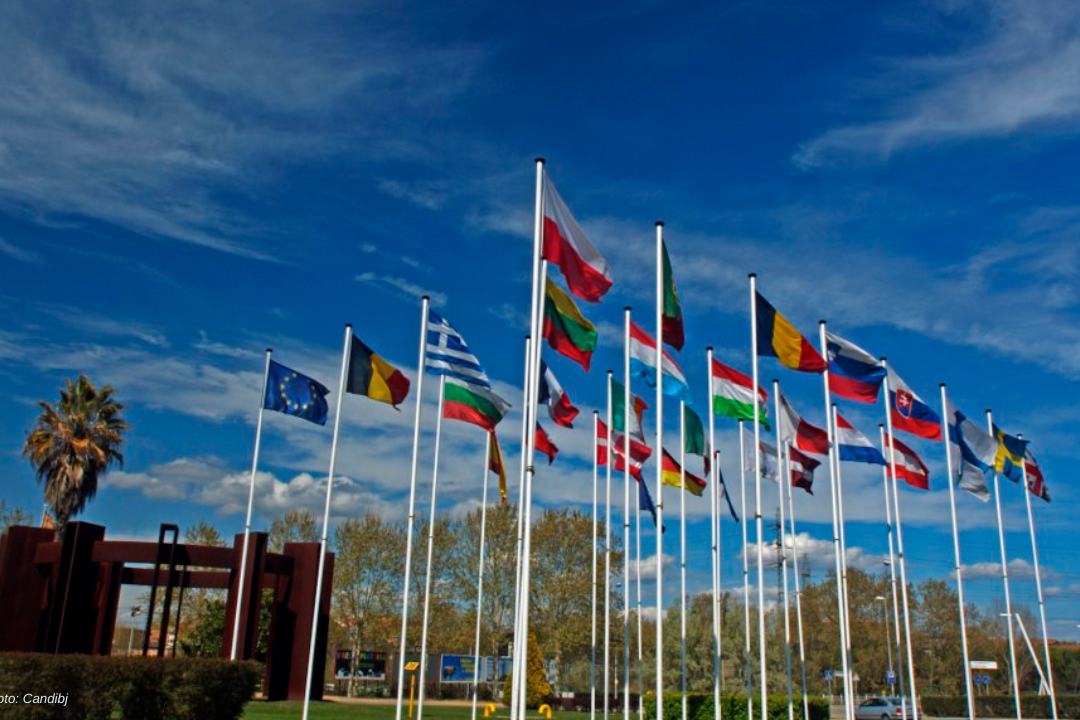
The global fight for critical raw materials from the global South is intensifying among major economies such as China, the United States and Europe. In this unbridled competition, the European Union (EU) intends to strengthen its relations with Latin America and the Caribbean (LAC) through a new and attractive offer. Therefore, the next EU-LAC summit on July 17 and 18 is expected to present a “new era of cooperation” focused on renewable energies, strategic raw materials (in favor of the EU) and adaptation to climate change (in favor of LAC). However, for the partnership to be balanced, it must ensure sufficient public financing from the EU, address materials consumption in the EU and support local economies and industrialization in LAC. The EU's commitment: principled investments
The EU's agenda for its renewed relations with LAC focuses largely on the energy transition. Through the Global Gateway, the EU's plan for major investments in infrastructure development, the bloc hopes to invest, together with the private sector, in critical raw materials value chains and in the production of green hydrogen.
However, private investments, trade facilitation and large-scale energy and infrastructure projects carry risks, which Caritas organizations in the region witness in their daily work.
“Contamination of water sources, deforestation, land grabbing and violation of the rights of indigenous peoples occur too frequently in agriculture and mining,” explains Elizabeth Coca, Ecotheology Coordinator at Caritas Ecuador. Regarding the green transition, he adds “Investors in ‘clean energy’ must apply corporate responsibility standards, otherwise they will simply perpetrate the same destruction of biodiversity and violations of labor rights as always.”
But the EU claims to be making an attractive offer to LAC countries, especially compared to other global players such as China, through its commitment to “the highest social and environmental standards.”
However, although the EU is taking very concrete steps to respond to its own interests - such as planning to establish a “Critical Raw Materials Club”, signing a Raw Materials agreement Criticism of Argentina or the launch of a Renewable Hydrogen Fund for Chile - respect for human rights and environmental protection only take a backseat. The upcoming EU Directive on corporate sustainability and due diligence appears to exempt financial institutions from many obligations. This exemption is worrying, considering that the Global Gateway relies heavily on financial institutions such as development banks. As a result, these institutions could invest in companies involved in the sourcing of conflict minerals or support agricultural companies involved in land grabbing without facing significant liability for such actions.
Three ingredients for a positive EU offer for LAC
Firstly, the EU must put its money where its mouth is. What the EU appears to offer is a narrative - about democratic values, decent jobs and nature preservation - that makes it the lesser evil on the geopolitical stage, but which lacks financial backing.
Along with other high-income countries, EU Member States have not been able to mobilize the $100 billion per year of climate finance agreed in 2009. The EU has also failed to provide sufficient debt forgiveness or funding in the form of grants, even though they are essential to freeing up resources from LAC countries for climate action and social sectors. Furthermore, the EU has yet to demonstrate that it takes seriously the concerns of Southern actors regarding the reform of international financial institutions.
Secondly, the EU's energy transition must not replicate the destructive model of the fossil fuel sector, increasing the extractive industry in LAC, mainly in order to satisfy the ever-increasing and assumed demand of Europe. It is time to address consumption in Europe and question the dominant development model; The EU's offer to LAC will be neither “green” nor positive if it does not address these root causes.
Thirdly, LAC needs investments in models that allow its industrialization and social progress. While export-oriented economies and foreign investments can support some social investments in the short or medium term, they are not capable of solving the structural factors of poverty and inequality. An energy transition that can benefit local communities will require transformed business models. The EU may have a more attractive sales pitch by supporting decentralized energy systems that allow communities to have more control over how energy is produced and distributed.
Different models are already working, such as the social and solidarity economy, which rebalances economic, social and environmental objectives and is promoted by Caritas around the world. Latin America is one of the regions where the social economy has experienced the greatest expansion, employing more than 13 million people, developing mutual support networks rooted in the popular and informal economy (for example, the Latin American Network of Community Commerce – RELACC), creating savings and credit systems and supplying energy to millions of people. These economic forms demonstrate that new solutions are out there, waiting for the opportunity to become politically viable.
The upcoming Brussels summit can represent that political opportunity, to raise the bar to higher social and environmental standards and support the aspirations of the countries and people of LAC. |
Care of the common home and Holistic Human Development