Stories
América Latina y el Caribe
15-10-2025
"La periferia es el centro": investigación propone modelo de fortalecimiento y liderazgo local a partir de buenas prácticas en Amazonía
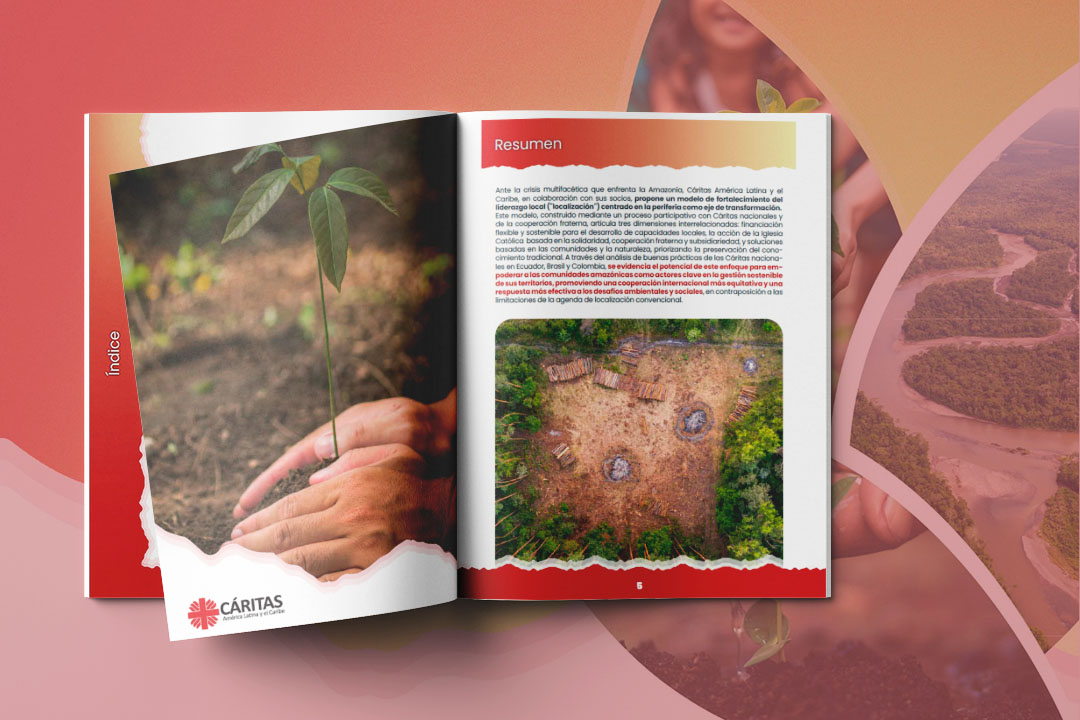
Cáritas América Latina y el Caribe, en colaboración con Cáritas Noruega, presenta una investigación titulada "La Periferia es el centro: fortalecimiento de liderazgo local para la Amazonía desde Cáritas América Latina y el Caribe". El trabajo ha sido coordinado por el investigador Eduardo Ernesto Arias Rodas y el Coordinador de Gestión de Conocimiento y Proyectos de Cáritas América Latina y el Caribe, Jose Oscar Henao Monje. También cuenta con contribuciones de Nicolás Meyer, Damiana Lanusse y Liliana Zamudio Vaquiro.
La investigación está disponible en versión completa y resumen ejecutivo. El documento busca ser una contribución desde la experiencia territorial de Cáritas en la Cuenca Amazónica a la discusión global sobre la "localización" de la ayuda humanitaria.
Su objetivo principal es integrar la acción humanitaria con el desarrollo sostenible, reconociendo y empoderando a las comunidades locales como actores clave en la protección y gestión de la Amazonía.
Voces locales y cooperación fraterna
Ante la crisis multifacética que enfrenta la Amazonía, Cáritas América Latina y el Caribe, en colaboración con sus socios, propone un modelo de fortalecimiento del liderazgo local ("localización") centrado en la periferia como eje de transformación.
Este modelo, construido mediante un proceso participativo con Cáritas nacionales y de la cooperación fraterna, articula tres dimensiones interrelacionadas: financiación flexible y sostenible para el desarrollo de capacidades locales, la acción de la Iglesia Católica basada en la solidaridad, cooperación fraterna y subsidiariedad, y soluciones basadas en las comunidades y la naturaleza, priorizando la preservación del conocimiento tradicional.
Potencial y desafíos
El análisis de buenas prácticas de las Cáritas nacionales en Brasil, Bolívia, Ecuador, Perý, Venezuela y Colombia evidencia el potencial de este enfoque para empoderar a las comunidades amazónicas. Sin embargo, el documento también identifica desafíos persistentes, como la falta de flexibilidad en el financiamiento por parte de las organizaciones internacionales y la resistencia al cambio para ceder poder y protagonismo a los actores locales.
Cáritas se posiciona como un actor clave en la facilitación de la localización, actuando como un puente entre los donantes y las organizaciones locales para asegurar que la ayuda sea efectiva y adaptada a las realidades del contexto. La propuesta busca contribuir a la superación de las limitaciones de la agenda de localización convencional, ofreciendo un enfoque más integral que potencia el liderazgo comunitario.
Care of the common home and Holistic Human Development