Stories
América Latina y el Caribe
29-07-2025
Cáritas LAC fortalece alianzas en Washington para enfrentar crisis regionales con enfoque de corresponsabilidad
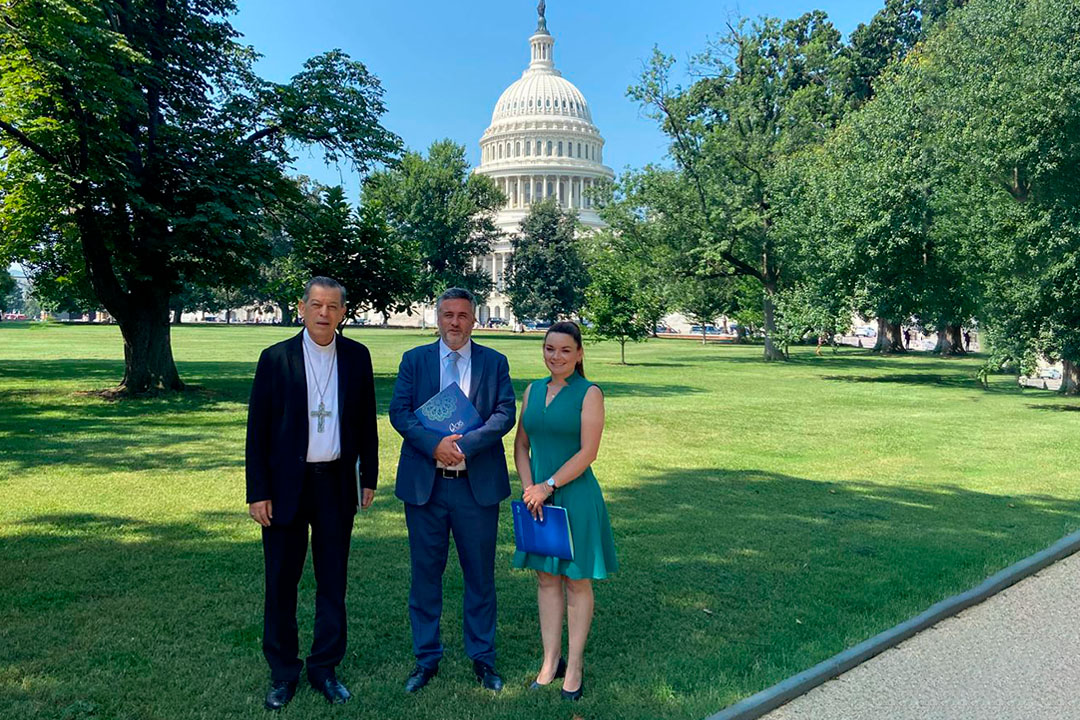
Cáritas América Latina y el Caribe realizó una significativa gira de incidencia de tres días en Washington D.C., del 21 al 23 de julio de 2025, donde sostuvieron reuniones con congresistas, parlamentarios, representantes de la Secretaría de Estado de EE.UU, embajadores de varios países de la región en el país y otras organizaciones. Participaron de la gira el arzobispo de Yucatán y presidente de Cáritas LAC, Monseñor Gustavo Rodríguez Vega, acompañado del coordinador regional Nicolás Meyer y la coordinadora de Fortalecimiento Institucional Ana Mercedes Arias Pimentel. Estas sesiones contaron con el acompañamiento constante de la Conferencia de Obispos Católicos de Estados Unidos (USCCB) y Catholic Relief Services (CRS), consolidando un frente común ante los desafíos regionales.
El objetivo central de la misión fue sensibilizar a los tomadores de decisiones sobre la compleja realidad que atraviesa la región y el papel estratégico que desempeña la red Cáritas en la promoción de respuestas humanas y sostenibles frente a las múltiples crisis.
Nicolás Meyer, coordinador regional de Cáritas LAC, enfatizó la naturaleza colaborativa de la visita: "Toda la visita fue una colaboración entre Cáritas LAC, CRS y la Conferencia de Obispos Católicos de Estados Unidos, partiendo de la premisa de que somos una sola Iglesia. No es que los del sur venimos a hablar al norte, sino que es la voz de la Iglesia la que traspasa fronteras".
Movilidad, paz y gestión de emergencias: los grandes temas para LAC
Se destacó que la migración forzada desde Venezuela, Haití y el Triángulo Norte de Centroamérica es una "estrategia de supervivencia" ante la falta de condiciones dignas. Cáritas instó a EE.UU. a reorientar sus enfoques hacia la estabilidad regional, mediante inversiones en desarrollo comunitario, medios de vida y protección de derechos humanos. Se subrayó el trabajo de Cáritas en los territorios, que incluye asistencia humanitaria, casas de acogida, seguridad alimentaria y diálogo político.
Frente a la crisis de violencia impulsada por el crimen organizado y la exclusión, se enfatizó que "la paz no se exporta: se construye desde las raíces". Se propuso apoyar las capacidades locales en cohesión social, salud mental y participación ciudadana, alineadas con la Agenda 2030 y el Marco de la ONU para la Paz Sostenible. Cáritas resaltó su papel único en zonas de alta fragilidad institucional, donde sus agentes pastorales son, en muchos casos, el único sostén comunitario.
Ante los desafíos del cambio climático, se abogó por cambiar de un enfoque reactivo a uno preventivo, fortaleciendo la resiliencia comunitaria. Se invitó a reconocer a Cáritas como un socio confiable para canalizar ayuda con estándares internacionales, especialmente donde los sistemas colapsan.
Caminar juntos en la búsqueda de soluciones
Meyer destacó la positiva acogida de la delegación y la valoración del trabajo desarrollado por comunidades y organizaciones basadas en la fe. “Encontramos que tanto demócratas como republicanos mencionaron el papel crucial e indudablemente significativo que tenemos en las comunidades". El coordinador también compartió una observación sobre el clima actual: "Me impresionó cómo todo el mundo con el que hablábamos estaban en la incertidumbre. Es un momento de crisis, de cambio y de incertidumbre, y que no está clarísimo el rumbo".
La gira marca un paso vital para posicionar una narrativa de corresponsabilidad hemisférica. EE.UU. tiene una contribución histórica y ética en la región, y hoy persisten los intereses comunes —como la estabilidad y la gestión migratoria— que permiten construir una agenda compartida.
Reflexionando sobre la composición de la delegación, Meyer señaló la importancia de la sinodalidad: "Se sigue viendo el respeto a una Iglesia sinodal en el sentido de que fuimos el Monseñor Gustavo, como obispo, y nosotros como laicos".
Esta acción se enmarca en una hoja de ruta estratégica de incidencia regional que Cáritas LAC viene desarrollando de manera sostenida, con miras a consolidar alianzas transformadoras a mediano y largo plazo. Estas perspectivas, alineadas con agendas globales, reflejan el compromiso de Cáritas por transformar las realidades estructurales de la región desde la raíz, garantizando que la cooperación internacional priorice la dignidad humana y la justicia.
En diversos espacios, se valoró el papel único de la Iglesia y de la red Cáritas por su presencia cercana y sostenida en territorios donde pocas organizaciones llegan. En el marco de la conmemoración de sus 70 años de servicio en América Latina y el Caribe, Cáritas reafirma su identidad como una red que escucha, acompaña y protege a las comunidades más vulnerables, especialmente en contextos de alta fragilidad, siendo esta capacidad reconocida como un activo estratégico. Desde una identidad profundamente enraizada en la dignidad humana, Cáritas promueve una cultura del cuidado que se expresa en su forma de estar, servir y articular respuestas junto a actores locales, integrando de manera transversal principios de protección y salvaguardia.
.jpg)
.jpg)
.jpg)
.jpg)
.jpg)
.jpg)
.jpg)
.jpg)
Identity and spirituality