Stories
América Latina y el Caribe
29-04-2026
Cardenal Spengler: “La Iglesia es una reserva ética frente a los desafíos de América Latina”
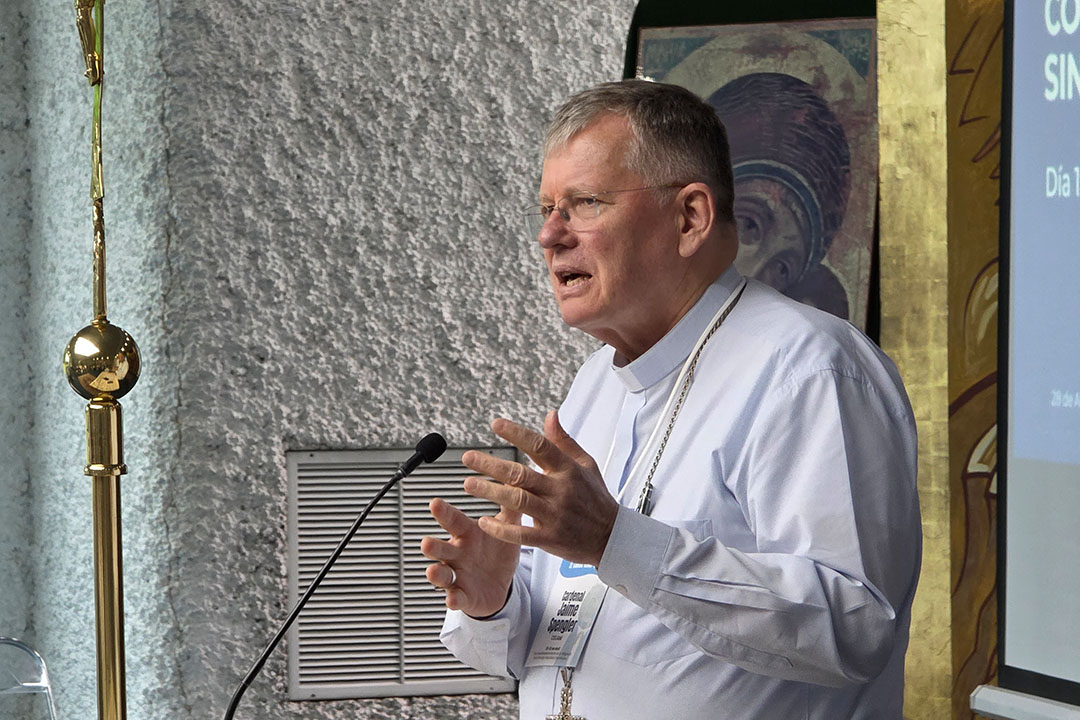
SANTO DOMINGO, República Dominicana – En el marco del IV Encuentro de Cooperación Sinodal para América Latina y el Caribe, el arzobispo de Porto Alegre, Brasil y presidente del Consejo Episcopal Latinoamericano y Caribeño (CELAM), Cardenal Jaime Spengler, participó del panel inaugural compartiendo la situación de la Iglesia y la Cooperación en América Latina y el Caribe. Su intervención subrayó la necesidad de una lectura atenta a los "signos de los tiempos" en una región atravesada por encrucijadas históricas.
Un continente en encrucijada institucional y económica
Para el Cardenal Spengler, América Latina atraviesa una encrucijada histórica marcada por la confluencia de tensiones globales y dinámicas regionales complejas. Según explicó, la falta de estructuras sólidas impide transformar la riqueza en desarrollo humano, dejando el campo abierto a amenazas como la corrupción, el narcotráfico, la fragilidad de los sistemas democráticos y la afectación a la casa común por el cambio climático.
En este contexto, subrayó cómo la actual reconfiguración geopolítica impacta directamente al continente. “Si por un lado, la reconfiguración geopolítica permite aprovechar económicamente las oportunidades que abre la demanda exponencial de minerales críticos asociados a la transición energética, dado que la región cuenta con importantes reservas de estos minerales, por otro lado, se enfrenta al regreso de una política exterior estadounidense agresiva, que busca restaurar la preeminencia de Washington en el hemisferio mediante una coalición militar e ideológica selectiva, en claro contrapunto a la creciente influencia económica de la China en la región”, señaló.
El punto central de la reflexión del presidente del CELAM giró en torno al papel estratégico de la fe en la reconstrucción del tejido social. Según el purpurado, la Iglesia Católica se mantiene como una "reserva ética respetada en el continente", una autoridad moral que, en un escenario de crisis de las democracias y escándalos institucionales, tiene el deber de alzar su voz.
Integración regional pragmática
El purpurado sostiene que “el futuro de la región dependerá, en gran medida, de la capacidad de sus actores con mayor peso económico y demográfico —en particular Brasil y México— para articular una visión alternativa de la integración regional que sea pragmática, basada en el respeto a la soberanía y centrada en la resolución de los problemas estructurales que perpetúan el subdesarrollo y la desigualdad”.
Bajo esta premisa, la cooperación sinodal se presenta como el motor de una visión transformadora orientada a mitigar las desigualdades extremas. “Urge priorizar la formación del laicado para que los bautizados sean verdaderos agentes de transformación en la sociedad”, señaló Spengler, vinculando así la misión de la Iglesia y las agencias de ayuda con la necesidad imperativa de fortalecer las instituciones locales.
El arzobispo de Porto Alegre concluyó su intervención con un llamado a la autonomía regional, advirtiendo que, sin un cambio de rumbo, América Latina seguirá siendo un tablero de disputa para potencias externas. En su análisis, subrayó que la región debe reconocer su ubicación histórica y geográfica para redefinir una estrategia de desarrollo propia y soberana.
Latinoamérica necesita replantearse radicalmente para poder redefinir su estrategia de desarrollo, teniendo clara su ubicación geográfica y su posición jerárquica dentro del “hemisferio occidental” [...] Este reposicionamiento, sin embargo, no puede ignorar la nueva realidad geopolítica: la presencia china es estructural, la crisis del neoliberalismo ha abierto espacio a alternativas progresistas, y la polarización interna de la región refleja, en última instancia, las contradicciones no resueltas de su desarrollo histórico.
Finalmente, el purpurado enfatizó que, sin este replanteamiento profundo, los pueblos y gobiernos del continente tendrán un margen escaso para la acción autónoma. Esta visión desafía a la cooperación sinodal a ser no solo un mecanismo de ayuda, sino un espacio de pensamiento y acción que acompañe a la región en la superación de sus deudas históricas y en la construcción de un futuro más justo y solidario.
Care of the common home and Holistic Human Development,
Democracy, human rights and peace building,
Identity and spirituality,
Human mobility