Stories
América Latina y el Caribe
30-04-2026
Cardenal Michael Czerny: “La cooperación sinodal exige que la Iglesia abandone las apariencias y escuche el clamor de las bases”
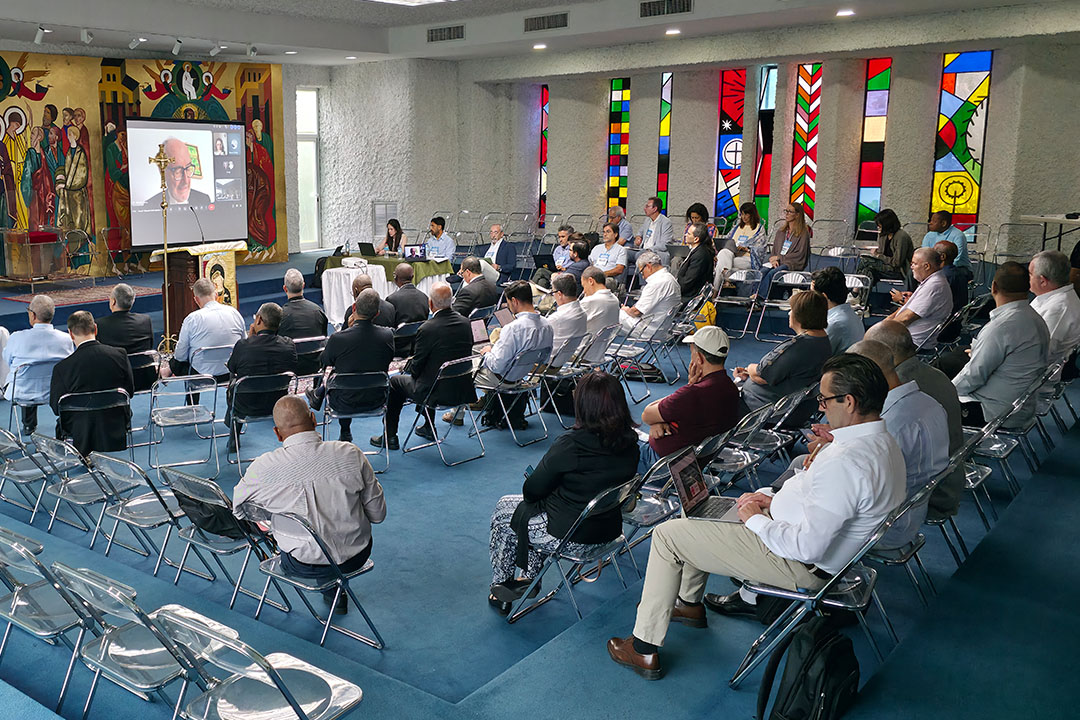
SANTO DOMINGO, República Dominicana – El IV Encuentro de Cooperación Sinodal para América Latina y el Caribe, que reúne en Santo Domingo a las principales agencias de ayuda y liderazgos de la Iglesia latinoamericana para redefinir las estrategias de asistencia en la región, es una oportunidad para ver la realidad y hacer un discernimiento profético frente a los desafíos de la región. Durante el panel inaugural sobre la situación de la Iglesia, el Cardenal Michael Czerny, Prefecto del Dicasterio para el Servicio del Desarrollo Humano Integral, desafió a los participantes a trascender la gestión burocrática para abrazar una "universalidad en comunión" que responda a los dolores reales de los pueblos.
El regreso a la realidad: superar la cultura de las apariencias
Para el Cardenal Czerny, el punto de partida de cualquier ayuda internacional debe ser un ejercicio honesto de análisis de coyuntura. Según el purpurado, el mayor peligro para los organismos de cooperación es el riesgo de dejarse llevar por una percepción superficial de la realidad, viviendo en lo que denominó como "las apariencias".
Estamos inmersos cada vez más en en un mundo electrónico, un mundo de imágenes y tengo un poco el miedo que estamos viviendo en lo que Platón llamaba las apariencias, osea, sin tocar fondo y sin precisar por dónde van las cosas y por dónde van nuestros esfuerzos.
El prefecto del Dicasterio recordó su experiencia misionera jesuíta y el método de análisis coyuntural que, a su momento, desarrollaron en el Centro Jesuita de Fe y Justicia Social, en Toronto, con un ejercicio llamado Naming the Moment.
El análisis de coyuntura, según señaló Czerny, no es un ejercicio académico, sino una necesidad espiritual para captar los signos de los tiempos, buscando caminos más seguros en el servicio a los pobres y a la iglesia. El ejercicio es oportunidad para no ofrecer soluciones para problemas que ya no existen o que no son la prioridad de quien más sufre, afirmó Czerny, instando a las agencias a mantener listas de desafíos "abiertas y dinámicas".
“¿Cómo anticiparse a los cambios y estar preparado para ellos? Quizás la última frase es la más ambiciosa, o sea, anticipar los cambios cuando nos parece casi imposible seguirlos, osea, cuando ya están sobre nuestras cabezas o frente a nuestros ojos”, subrayó el Cardenal.
Confrontar el trabajo de desarrollo frente a múltiples problemas
En un ejercicio de profunda honestidad institucional, el Cardenal Michael Czerny instó a las agencias y organismos de la Iglesia a resistir la tentación de declarar "prioridades de moda" que cierren la mirada a la realidad. El Prefecto defendió la necesidad de mantener un "catálogo abierto" de problemas para dejarse sorprender por los desafíos que la gente realmente enfrenta en su día a día, tras hacer un listado de varios temas y agregar al final la categoría que él considera la más importante: “etcétera, etcétera, etcétera”, en un tono muy cercano y informal, despertando la risa de los participantes.
“Debemos resistir la tentación de declarar dos o tres temas como totalmente prioritarios y estimularnos a percibir los desafíos que nuestra gente realmente enfrenta. En Roma hacemos un esfuerzo por no convencer a los demás de cuáles son los temas que deben enfrentar, sino por dejarnos abrir a la sorpresa de problemas que no están en nuestras listas, pero son vitales para las personas”, explicó el purpurado.
En este marco, Czerny realizó una autocrítica tras casi 50 años de labor en el campo del desarrollo, señalando dos fenómenos que, a su juicio, se dejaron crecer hasta volverse casi inmanejables por no haberles prestado atención cuando tenían proporciones abordables. El primero de ellos es el narcotráfico, al que calificó como un poder de dimensiones devastadoras.
“Hoy en día el narcotráfico tiene una fuerza y un impacto incalculable en la vida de muchísima gente. Me pregunto: ¿Qué estábamos pensando hace 20 o 30 años? ¿Por qué no lo tomamos en serio? La fuerza del crimen organizado hoy es de un poder casi indecible, inmesurable, y tiene un impacto horrible en las comunidades. Quizás no estaba en nuestra lista de temas y ahora parece casi imposible luchar contra eso”, lamentó.
Con este llamado, Czerny invitó a los participantes del encuentro a una vigilancia profética que no ignore los problemas estructurales mientras estos aún pueden ser transformados.
Universalidad frente a globalización
El Cardenal rechazó el término "global" cuando se aplica a la Iglesia, lo que él considera como “intolerable”, argumentando que la globalización tiende a estandarizar y excluir. Por el contrario, defendió se manifiesta según un principio diferente, “ya que la iglesia subsiste en cada iglesia particular y precisamente así hace visible una forma de unidad que no se realiza contra la lo múltiple, sino dentro de él”.
No se trata de de una uniformidad impuesta desde arriba, sino reconociendo la riqueza de las diferencias locales, sin disolver los rostros concretos que la Iglesia toma forma en la historia, reflexionó Czerny.
Lo universal no coincide con lo que aplana las diferencias, sino con lo que las custodia y las ordena hacia una comunión más profunda, mostrando que la unidad más elevada no es la que estandariza, sino lo que hace posible la pertenencia recíproca sin pérdida de identidad.
La intervención de Czerny concluyó con un llamado a las agencias de cooperación para que se asuman como aliadas de procesos de larga duración, inspirados en el magisterio social de los Papas Francisco y León XIV.
“Las estructuras de injusticia deben ser reconocidas y destruidas con la fuerza del bien a través de un cambio de mentalidad, pero también con la ayuda de las ciencias y las técnicas mediante el desarrollo de políticas efi caces en la transformación de la sociedad”, señaló.
Al reafirmar que el desarrollo humano integral solo es posible cuando se devuelve al pueblo el protagonismo, su mensaje marcó el rumbo del encuentro: una cooperación que no teme tocar las heridas de un continente que clama por justicia.
.jpg)
-(pequeno).jpg)
.jpg)
Identity and spirituality