Avanza la VI Asamblea General de la Red CLAMOR: red de redes que camina junto a las personas en movilidad forzada
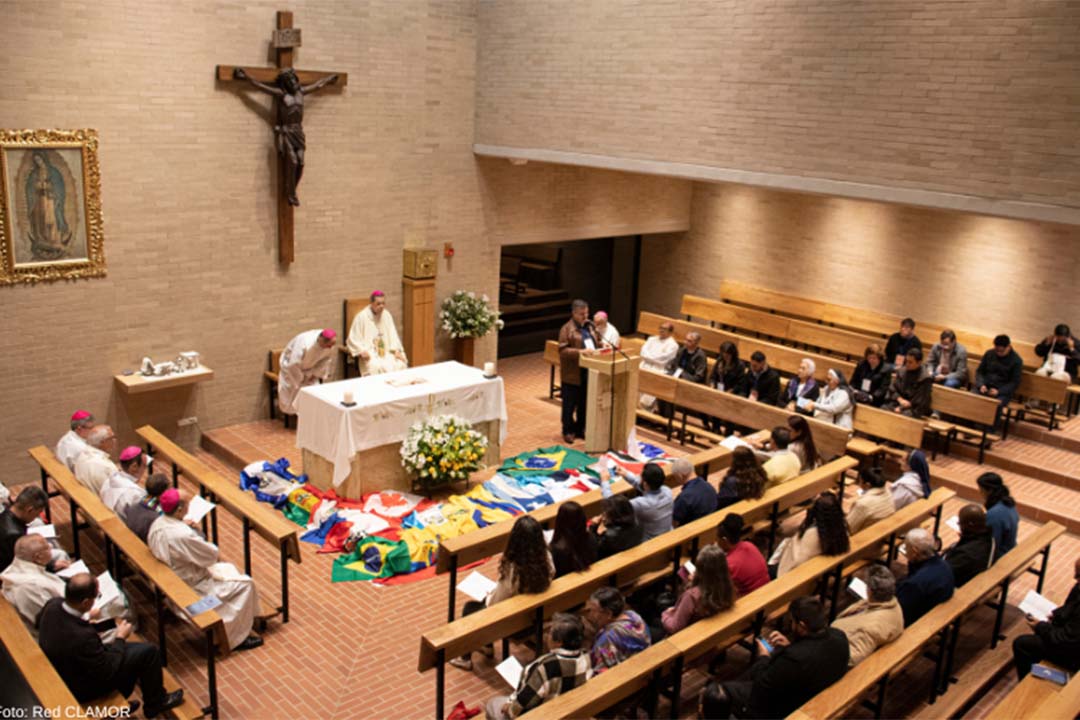
La Red CLAMOR, conformada por más de 50 organizaciones católicas que trabajan, desde la fe, por la defensa y promoción de los derechos humanos de los migrantes, refugiados y desplazados en América Latina y el Caribe, inició el martes 12 de septiembre de 2023 su VI asamblea general en la ciudad de Bogotá, Colombia.
El encuentro, que se extiende hasta el 15 de septiembre de 2023, tiene como lema «Ensancha el espacio de tu tienda» Is. (54,2-3) y busca fortalecer el trabajo en red así como la incidencia eclesial y social frente a los desafíos que siguen planteando los crecientes y cada vez más complejos flujos migratorios en la Región.
El primer día de asamblea comenzó con un gesto simbólico: un grupo de los migrantes que acompañan este encuentro, y que representan a los millones de personas que buscan un nuevo futuro en otros países, dieron entrada a la palabra de Dios y encendieron una luz que permanece en el centro del salón durante toda la asamblea. Luego, se escucharon las palabras de apertura por parte de Monseñor Gustavo Rodríguez, actual presidente de la Red CLAMOR y Arzobispo de Yucatán (México), quien destacó la importancia de la asamblea como un espacio de comunión, reflexión y acción.
Le siguió Mons. Robert Vitillo, secretario general de la Comisión Católica Internacional de Migración (ICMC), quien resaltó el papel de la Red CLAMOR como una expresión concreta del compromiso de la Iglesia con los migrantes y refugiados. A continuación, intervino el Padre Flavio Lauría, representante del Dicasterio para el Servicio del Desarrollo Humano Integral, quien transmitió el saludo del Dicasterio con sede en Roma, y recordó las orientaciones del papa Francisco para una pastoral migratoria integral.
Finalmente, el Padre Francisco Hernández, director del Centro de Programas y Redes de Acción Pastoral (Ceprap) del CELAM, agradeció la presencia y participación de los delegados y delegadas de las diferentes organizaciones que conforman la Red CLAMOR apuntando que es un modelo de Sinodalidad que presta un importante servicio a la Iglesia Latinoamericana. Posteriormente, Elvy Monzant, secretario ejecutivo de la Red CLAMOR, procedió a la verificación del quórum de esta asamblea, que cuenta con 78 asistentes presenciales.
Durante la mañana del martes 12 de septiembre hubo un momento de espiritualidad facilitado por la Hna. Liliana Franco, presidenta de la Confederación Latinoamericana y Caribeña de Religiosos y Religiosas (CLAR), quien invitó a los participantes a “vislumbrar juntos un horizonte misionero”, en una “historia que se construye en el claro-oscuro de lo humano”, y hacerlo a la escucha de Dios, que es el “eterno hablante”. También animó a aprovechar esta “fiesta de la interculturalidad”, como oportunidad para “renovar las fuerzas que nos permitan seguir caminando con los que migran por distintas geografías”.
VER Y ESCUCHAR DESDE LA FE
La jornada vespertina de este primer día de encuentro se inició con el bloque titulado “Una mirada a la realidad”, en el que se contó con las intervenciones de Angélica Uribe, oficial de ACNUR, y Julio Crocci, Coordinador de Procesos Intergubernamentales de OIM. Ambos expusieron sobre el contexto actual y los desafíos y oportunidades que enfrenta la región en materia de movilidad humana, así como las acciones que realizan sus respectivas agencias para proteger y asistir a las personas en situación de vulnerabilidad.
Consecutivamente, se pasó a un panel con obispos de frontera, donde participaron Monseñor Celmo Lázari, obispo de Sucumbíos, Ecuador; Monseñor Jaime Villarroel, obispo de Carúpano, Venezuela; Monseñor Bernabé Sagastume, obispo de San Marcos, Guatemala y Monseñor Guadalupe Torres, obispo de Ciudad Juárez, México. Los prelados compartieron sus preocupaciones, experiencias y testimonios sobre la realidad que viven los migrantes y refugiados en sus territorios, así como las respuestas que brinda la Iglesia desde la pastoral, la caridad y la incidencia.
Luego, Nicolás Pedemonte presentó el informe sobre migración en América Latina realizado por el Centro de Gestión del Conocimiento del CELAM y la Universidad San Alberto Hurtado. El documento ofrece un diagnóstico actualizado sobre los flujos migratorios en la Región, así como un análisis de las causas estructurales y los impactos sociales, económicos y culturales que genera la movilidad humana.
En la última parte de la tarde se realizaron talleres simultáneos sobre tres ejes temáticos: incidencia, economía solidaria y ecología integral. Los participantes pudieron profundizar en estos temas y dialogar sobre las buenas prácticas y los desafíos que se presentan para la acción de la Red CLAMOR.
La jornada concluyó con la celebración de la santa eucaristía, presidida por el presidente de la Red, Monseñor Gustavo Rodríguez Vega. En su homilía, monseñor Vega invitó a los asambleístas a seguir el ejemplo de María, que acogió y acompañó a Jesús en su camino hacia la Cruz. Asimismo, los animó a ser una Iglesia en salida, que se hace cercana a los más pobres y excluidos.
NDP: Comunicaciones Red CLAMOR
Human mobility