Stories
América Latina y el Caribe
01-10-2024
Encuentro de la Zona Bolivariana: construyendo el futuro de la cooperación regional
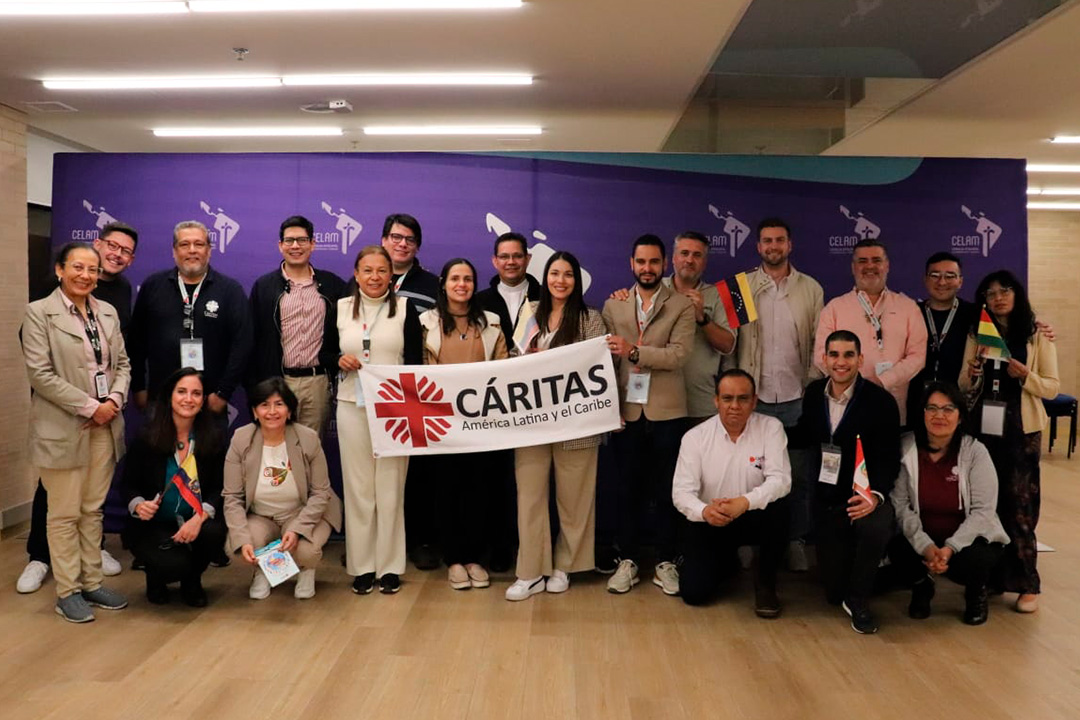
La ciudad de Bogotá fue sede del Encuentro de la Zona Bolivariana de Cáritas los días 23 y 24 de septiembre de 2014, reuniendo a directores y delegados de cinco países - Colômbia, Venezuela, Perú, Ecuador y Bolívia - bajo el lema "Construyendo nuestra localización... trazando el camino hacia el futuro".
El evento, que contó con la participación de miembros del secretariado regional y Cáritas hermanas, marcó un hito importante en la colaboración regional y el fortalecimiento de las estrategias de acción de Cáritas en América Latina.
El encuentro se centró en cuatro objetivos principales: identificar posibilidades de consenso para orientar acciones futuras y fortalecer la incidencia; alinear el Marco Estratégico de Cáritas con la programación de la Zona Bolivariana; evaluar el desarrollo de la localización en la región; y proponer indicadores para medir objetivamente los avances en la implementación de la localización. Además, se discutieron temas cruciales como la realidad de los países bolivarianos, las perspectivas de la acción de Cáritas, y se profundizó en el tema principal de la localización.
El director de Cáritas del Perú, Manuel Huapaya, destacó la importancia del encuentro. "Ha sido un tiempo de mucha bendición y apertura. Hemos planteado temas estratégicos sobre cómo mejorar nuestro caminar como Cáritas y hemos logrado una apertura con las Cáritas hermanas en todo este proceso de localización". Huapaya enfatizó que los acuerdos alcanzados no son puntos cerrados, sino "caminos que estamos construyendo", resaltando el carácter dinámico y evolutivo de las discusiones.
Por su parte, Janeth Márquez, directora de Cáritas Venezuela y animadora de la zona, subrayó los logros del encuentro. "Hemos estado viendo cómo abordar los problemas y clamores que tenemos en común, llegando a consensos sobre qué vamos a trabajar".
Márquez también destacó un aspecto crucial del evento.
Culminamos evaluando la localización de las realidades de nuestros países y las relaciones entre Cáritas, lo que nos ha permitido empezar a trazar un camino para un protocolo real de cooperación.
Este enfoque en la localización y la cooperación adaptada a las realidades regionales marca un paso significativo en la evolución de la labor de Cáritas en la Zona Bolivariana, sentando las bases para una colaboración más efectiva y contextualizada en el futuro.
.jpg)
.jpg)
.jpg)
.jpg)
.jpg)
.jpg)
.jpg)
.jpg)
.jpg)
.jpg)