Stories
América Latina y el Caribe
31-07-2024
Darién: encontrarse con los migrantes es encontrarse con Cristo
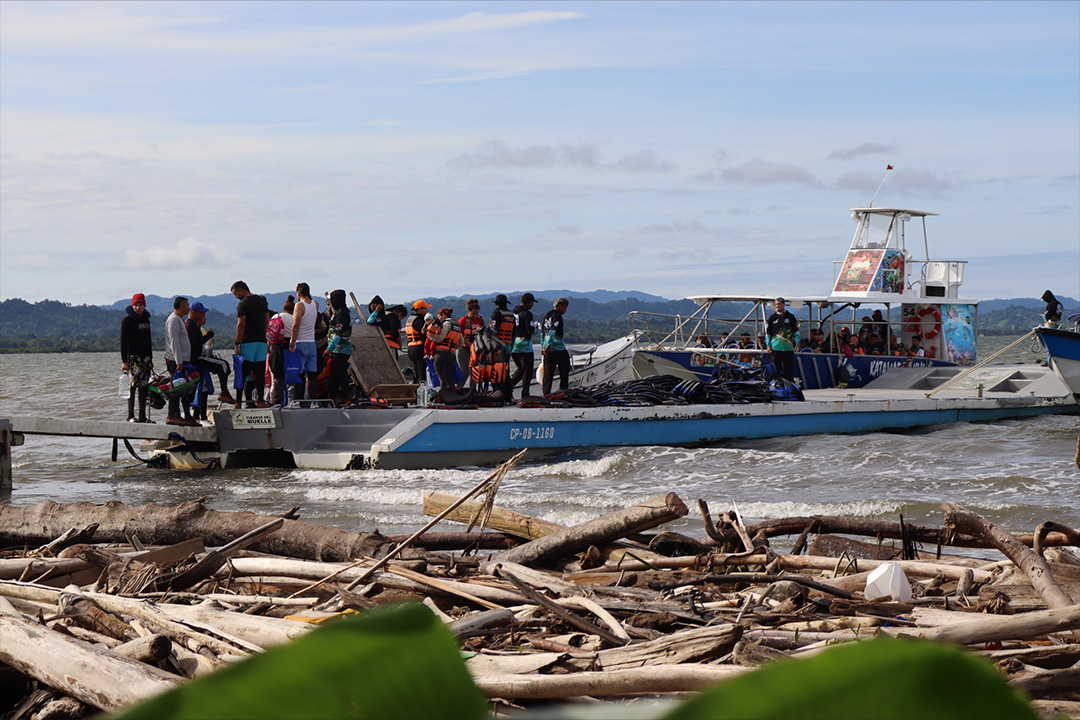
Encontrarse con los migrantes es encontrarse con Cristo. Esta fue la constatación tras días intensos en Necoclí, a orillas del mar caribe colombiano, que acogió del 22 al 26 de julio, el taller vivencial “Caminando Juntos en el Darién", organizado por Red Clamor y de lo cual participó Cáritas América Latina y Caribe por su comunicador Marcus Neto. Este evento reunió a comunicadores y responsables de incidencia de diversas organizaciones para analizar y vivir de cerca la realidad migratoria en la región del Darién.
Durante el taller, los participantes tuvieron la oportunidad de acercarse a la realidad vivida por los migrantes en el territorio colombiano y en el territorio panameño, además de sumergirse en la experiencia migratoria a través de la convivencia directa con los migrantes, escuchándolos y compartiendo su realidad.
Día con los migrantes
Un momento destacado del taller fue el día dedicado a convivir con los migrantes en Necoclí, muchos que están prontos a cruzar hacia la selva del Darién y algunos que tienen larga permanencia en la región, una de las rutas migratorias más desafiantes de América Latina y que, en su mayoría, quieren llegar a Estados Unidos. Esta experiencia permitió una comprensión más profunda de los desafíos y esperanzas que acompañan a los migrantes en su travesía.
El comunicador del Selacc, Marcus Neto, quien participó en el taller, compartió su experiencia.
Este taller no solo me permitió entender la magnitud del fenómeno migratorio en el Darién, con sus sufrimientos, sino también enseñó la importancia de la solidaridad y la empatía en nuestro trabajo como comunicadores. De mi parte, me voy con el compromiso de seguir visibilizando las historias de estos valientes migrantes. Lo que más me conmovió fue la realidad de la infancia. La inmensa mayoría de las familias que conocí tenían al menos uno o dos hijos. Lo que oímos, tanto de expertos como de los propios migrantes, es que el viaje, especialmente la travesía de la selva, es muy agotador. Desde entonces, no he dejado de pensar en los niños que a menudo no tienen suficiente preparación para hacerlo y que no son plenamente conscientes de lo que están viviendo.
Incidencia política
Al término del taller, se llevó a cabo una audiencia pública con la Comisión Segunda de la Cámara de Representantes. Este evento de incidencia reunió a los participantes y la comunidad local con congresistas colombianos y representantes de órganos públicos y fue crucial para generar un diálogo directo sobre la necesidad de formulación de políticas públicas que garanticen la protección de sus derechos humanos y el cumplimiento de los compromisos internacionales de Colombia. La Red Clamor, en representación de diversas organizaciones, hizo un llamado urgente para la implementación de políticas que protejan y promuevan los derechos de los migrantes en la región.
El objetivo de la audiencia fue visibilizar la compleja situación humanitaria de los movimientos mixtos: las poblaciones migrantes y refugiadas en la región, especialmente la de niños, niñas y adolescentes.
Necoclí, como punto de partida de muchas rutas migratorias, se ha convertido en un epicentro de vulnerabilidades. La audiencia permitirá a través del diálogo:
- Evidenciar en terreno: Las condiciones de vida, los riesgos y las necesidades específicas de las poblaciones migrantes y refugiadas.
- Socializar los hallazgos de y monitoreos realizados por la Red CLAMOR sobre los temas de protección de niños, niñas y adolescentes, derechos humanos, género y migración, personas con necesidad de protección internacional, tráfico y trata de personas, y la participación de Colombia en Cartagena+40.
- Fortalecer los mecanismos de coordinación entre las entidades estatales, la sociedad civil y las organizaciones para una respuesta integral a la crisis migratoria.
- Generar compromisos con los representantes para la adopción de medidas urgentes que contribuyan a la protección de los derechos humanos de las personas migrantes y refugiadas en Colombia.
- Por esta audiencia, se buscó influir en la definición de políticas públicas que garanticen el acceso a servicios básicos, a la justicia y a la protección, así como visibilizar la situación de las personas migrantes y refugiadas en Colombia ante la opinión pública y los medios de comunicación.
El Tapón del Darién
El fenómeno migratorio del Tapón del Darién es una situación histórica en la región, que ha sido foco de atención en diversos momentos. Desde 2006 se han presentado los primeros registros masivos, con un nuevo auge entre 2014 y 2016, debido a la extrema vulnerabilidad a la que se vieron expuestas más de 4.000 personas de origen cubano, haitiano, africano y asiático. Esta situación se agravó por el represamiento en el municipio de Turbo y sus alrededores, como consecuencia del cierre fronterizo y el control migratorio impuesto por el gobierno panameño de entonces.
Según datos recopilados por el gobierno panameño, más de 500.000 personas atravesaron el Darién en 2023. En su mayoría, eran personas provenientes de Venezuela, Ecuador y Haití, aunque se han registrado más de 50 nacionalidades diferentes. Además, según datos de UNICEF, en los primeros cuatro meses de 2024, más de 30.000 niños, niñas y adolescentes cruzaron por esta ruta, y al menos 2.000 fueron identificados como menores no acompañados o separados.
De acuerdo con la información institucional, entre enero y junio de 2024, 214.781 personas transitaron por Turbo y Necoclí con dirección hacia el Darién. Este movimiento también ha aumentado el número de personas en tránsito prolongado en estos municipios, con un promedio de 350 personas en situación de playa en Necoclí y más de 380 personas en situación de calle en Turbo, siendo aproximadamente el 30% de esta población niños, niñas y adolescentes.
(Fotos: Red Clamor)
.jpg)
.jpg)
.jpg)
.jpg)
.jpg)
.jpg)
.jpg)
.jpg)
.jpg)
Human mobility