Stories
América Latina y el Caribe
12-05-2026
Cáritas y organizaciones aliadas, junto a los migrantes, alzan su voz en Foro de la ONU
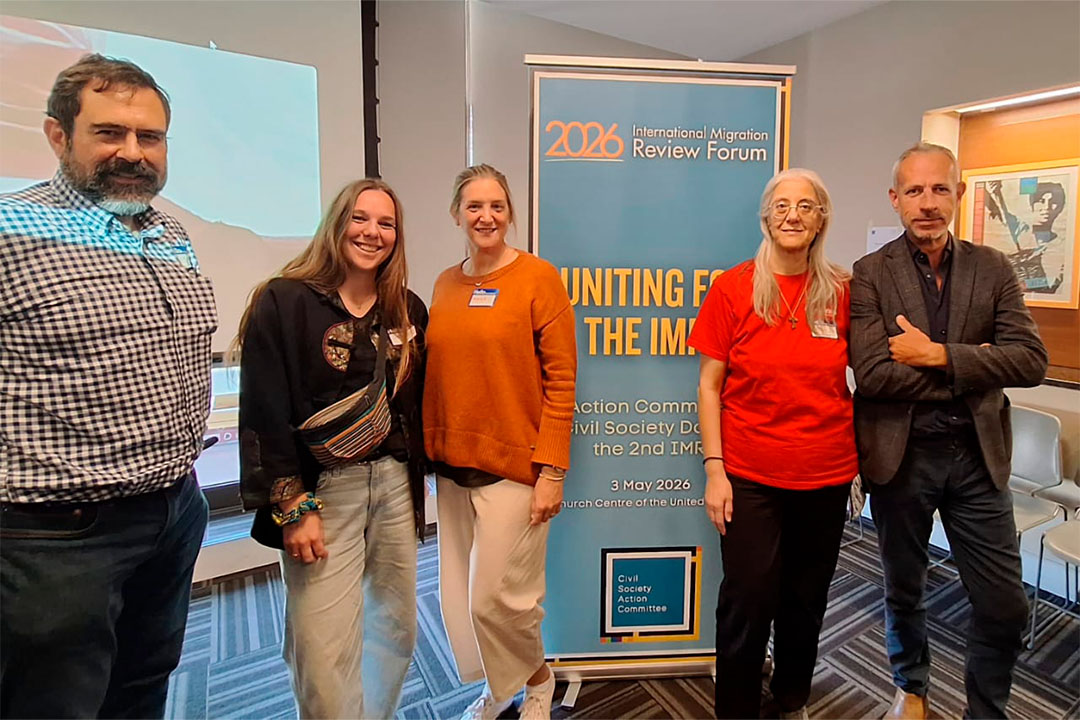
NUEVA YORK – Del 5 al 8 de mayo, una delegación de Cáritas y organizaciones aliadas que trabajan con el tema de migración participaron activamente en el segundo Foro de Examen de la Migración Internacional (FEMI) en la sede de las Naciones Unidas. El Secretariado Regional de Cáritas América Latina y el Caribe (SELACC), como miembro de la Confederación y co-fundador de la Red CLAMOR, conformó la delegación por su coordinador de Incidencia Política, Damiana Lanusse.
En 2018, los Estados Miembros acordaron examinar los avances logrados a nivel local, nacional, regional y mundial en la aplicación del Pacto Mundial para una Migración Segura, Ordenada y Regular (GCM, por sus siglas en inglés) en el marco de las Naciones Unidas, mediante un enfoque liderado por los Estados y con la participación de todas las partes interesadas pertinentes. El segundo Foro analizará los avances en la implementación del GCM.
Caminando con los "mensajeros de esperanza"
Uno de los hitos de la participación eclesial fue el evento paralelo titulado “Caminando con las personas mensajeras de esperanza: las comunidades de fe responden ante la reconfiguración migratoria en las Américas”. En este espacio, Damiana Lanusse intervino en nombre de la Red CLAMOR, resaltando que el Foro debe ser “el escenario para cerrar las brechas de implementación, y renovar compromisos hacia una gobernanza migratoria que no solo sea técnica, sino ante todo, profundamente humana.”
Lanusse destacó que las comunidades de fe no solo son proveedoras de asistencia humanitaria, sino testigos de la resiliencia de quienes migran. En su discurso, enfatizó:
Somos testigos de sus rostros cansados, pero también de sus ilusiones que se niegan a morir. Permanecemos al lado de quienes el sistema a menudo desatiende, olvida o sencillamente descarta, respondiendo con una acción pastoral que intenta mitigar los factores que impulsan los desplazamientos forzados.
La coordinadora de Incidencia Política del SELACC subrayó que “a Iglesia Católica ha sido, históricamente, un hospital de campaña en cada etapa del trayecto migratorio. ”Servimos a la dignidad de las personas independientemente de su estatus, abordando las causas de raíz, y apostando por soluciones lideradas por las propias comunidades."
Al final de su exposición, invitó a los distintos sectores presentes nel Foro a compartir la experiencia vivida por la Iglesia Católica, por sus distintas redes y comunidades, en tantos territorios de América Latina y del Caribe, en el acompañamiento a los migrantes.
Vengan y vean. Acérquense a nuestros centros de acogida en las ciudades y en las fronteras. Vengan, escuchen, y sobre todo, déjense conmover. Queremos contribuir, en amistad social, desde la mesa de los debates y las decisiones, en la reconfiguración de la respuesta integral que este tiempo nos pide.
Posicionamiento de Cáritas Internationalis: un llamado a la justicia
La Confederación de Cáritas Internationalis (CI) presentó una declaración de posicionamiento clave para las negociaciones del FEMI. El documento difundido en ingles celebra el marco para un discurso basado en derechos en el marco del Pacto Mundial para la Migración (PMM), pero constata que su progreso ha estancado. “Nos preocupa profundamente la regresión sistémica en los estándares de protección, incluidas las agendas anti-migratorias (como el auge de políticas populistas y la erosión de los compromisos legales internacionales), así como la contención y externalización de fronteras mediante acuerdos y retornos forzosos que socavan la dignidad humana.”
Los puntos centrales de la declaración de CI incluyen:
- Abordar las causas estructurales: Se insta a los Estados a mitigar los factores que impulsan el desplazamiento forzado, como la gobernanza débil, los conflictos y el cambio climático. Bajo la premisa de la encíclica Laudato Si’, se defiende que el desarrollo integral y la justicia climática son esenciales para que la migración sea una opción libre y no una necesidad de supervivencia.
- Salvar vidas y frenar la criminalización: Ante la cifra alarmante de más de 82,000 migrantes fallecidos o desaparecidos desde 2014, Cáritas exige el fin de la criminalización de la ayuda humanitaria. La gestión fronteriza debe medirse por la humanidad y no por la securitización, rechazando las narrativas xenófobas y el racismo sistémico.
- Vías seguras y derechos laborales: Es urgente diversificar los visados (humanitarios, laborales y climáticos) e implementar programas de regularización. Se destacan modelos exitosos como los "corredores humanitarios" de Cáritas Italiana y el reciente hito del Real Decreto español para regularizar a 500,000 personas, como ejemplos de integración basada en derechos y lucha contra la explotación.
- Fin de la detención arbitraria: La confederación rechaza la detención como "último recurso" y propone Alternativas a la Detención (ATD) basadas en la comunidad. Se hace especial énfasis en la protección de grupos vulnerables y en la prohibición total de la detención infantil, priorizando siempre la unidad familiar y el bienestar psicológico.
- Acceso a servicios básicos y "muros de protección": Garantizar salud y educación para todos los migrantes, independientemente de su estatus, es vital. Para ello, se propone implementar firewalls o muros de protección legales que impidan que los proveedores de servicios compartan datos con los organismos de control migratorio.
- Retornos dignos y no devolución: Cáritas se opone firmemente a la externalización de fronteras y a los centros de retorno offshore. Se exige el respeto incondicional al principio de no devolución (non-refoulement) y se condena cualquier política de retorno que ignore los peligros reales que enfrentan las personas en sus países de origen.
Una misión compartida
La presencia de Cáritas, de la Red CLAMOR y organizaciones aliadas en este espacio reafirma el compromiso de la Iglesia con la acogida, protección, promoción e integración de los migrantes, tal como lo pidió el Papa Francisco a lo largo de su pontificado y de los clamores recientes del Papa León XIV.
Al finalizar el foro, la red espera que las recomendaciones presentadas sean integradas en las políticas nacionales para que la migración deje de ser una travesía de dolor y se convierta en un derecho ejercido con libertad y seguridad.
.jpeg)
.jpeg)
.jpeg)
.jpeg)
.jpeg)
.jpeg)
Human mobility